Bringing Kelp Forests Back to Átl’ḵa7tsem/ Howe Sound

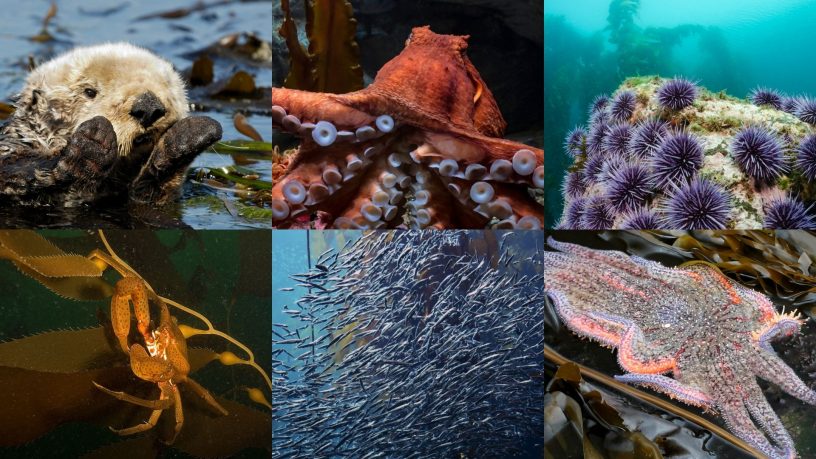
Kelp forests aren’t just beautiful underwater landscapes; they’re vital habitats for thousands of marine species including fish, crabs, sea stars, and the culturally and economically important Pacific herring.
In just the past 50 years, the world has lost nearly half of its kelp forests primarily due to climate change, coastal developments, and ecosystem imbalances. Now, our Seaforestation team, together with incredible partners, is working to bring these underwater forests back.
Why Átl’ḵa7tsem/Howe Sound?
Átl’ḵa7tsem / Howe Sound, located just north of Vancouver, was once a thriving habitat for herring spawn. However, over the past century, its coastal ecosystems have faced significant challenges from industrial activity, warming waters, and biodiversity loss. Through sugar kelp restoration, we hope to help restore the healthy conditions that once supported herring and a rich diversity of marine life.
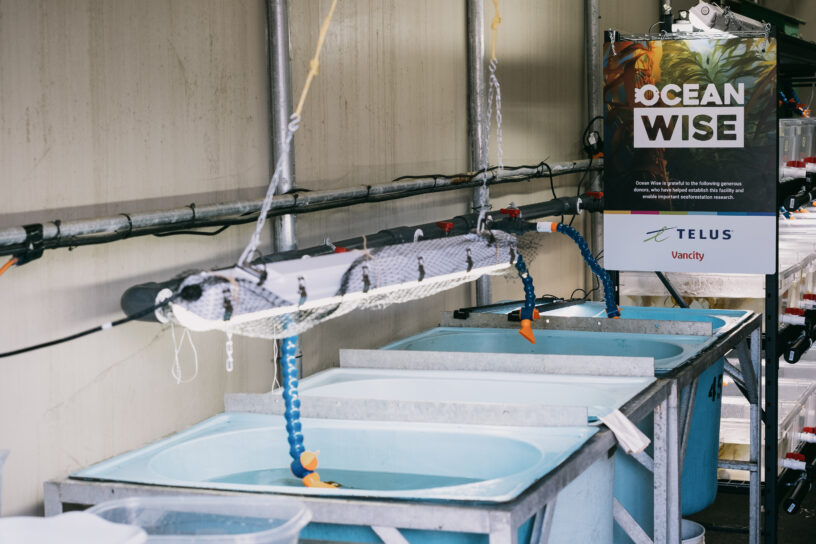
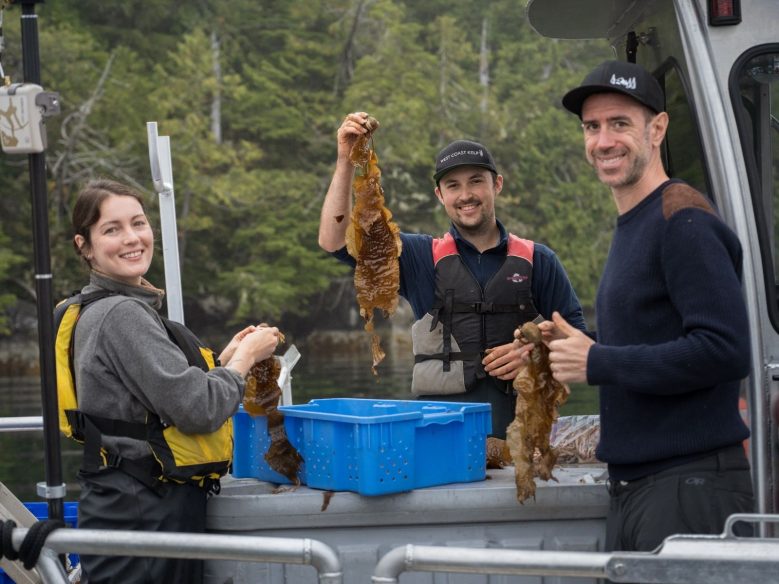
While canopy forming giant and bull kelp are often more visible and better known along B.C.’s coast, sugar kelp plays an equally crucial role for coastal ecosystems. Growing along shallow rocky reefs, its broad, golden-brown blades act like living architecture, providing food and shelter for thousands of marine species. Sugar kelp is also especially well-suited to grow in the Ocean Wise nursery because it is hardy, fast-growing, and native to Átl’ḵa7tsem/Howe Sound.
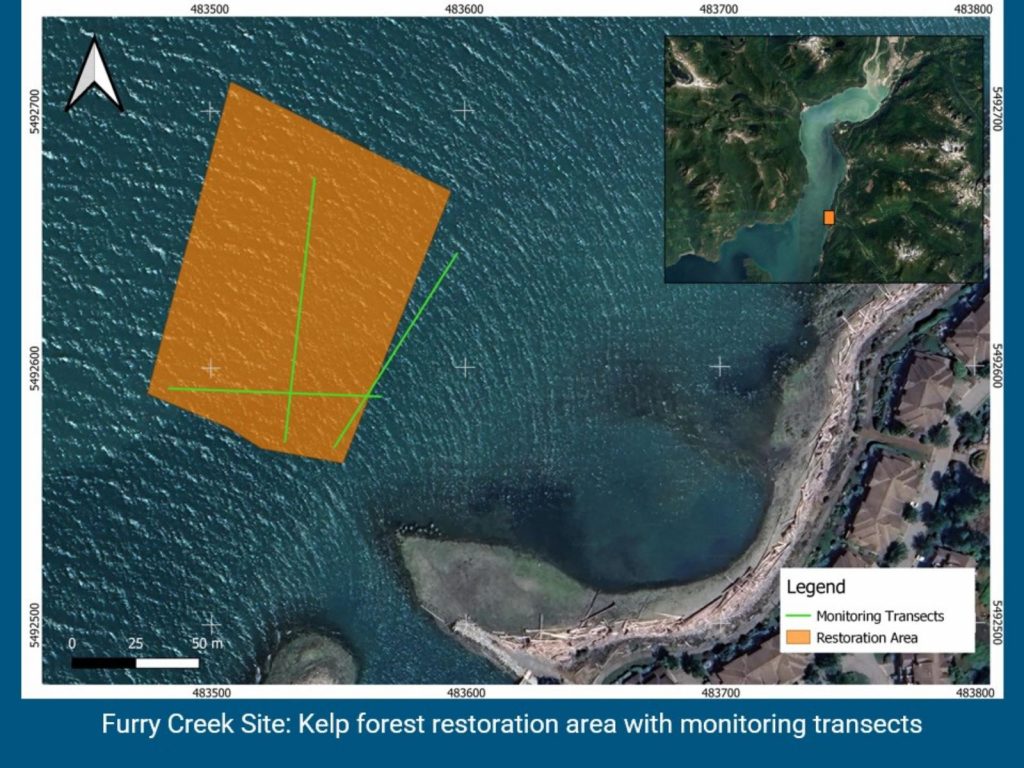
In partnership with the Squamish First Nation and support from Woodfibre LNG, our Seaforestation team worked with Keystone Environmental to transplant and monitor our nursery-grown sugar kelp into Átl’ḵa7tsem/Howe Sound in early 2025.
Learning from Experience
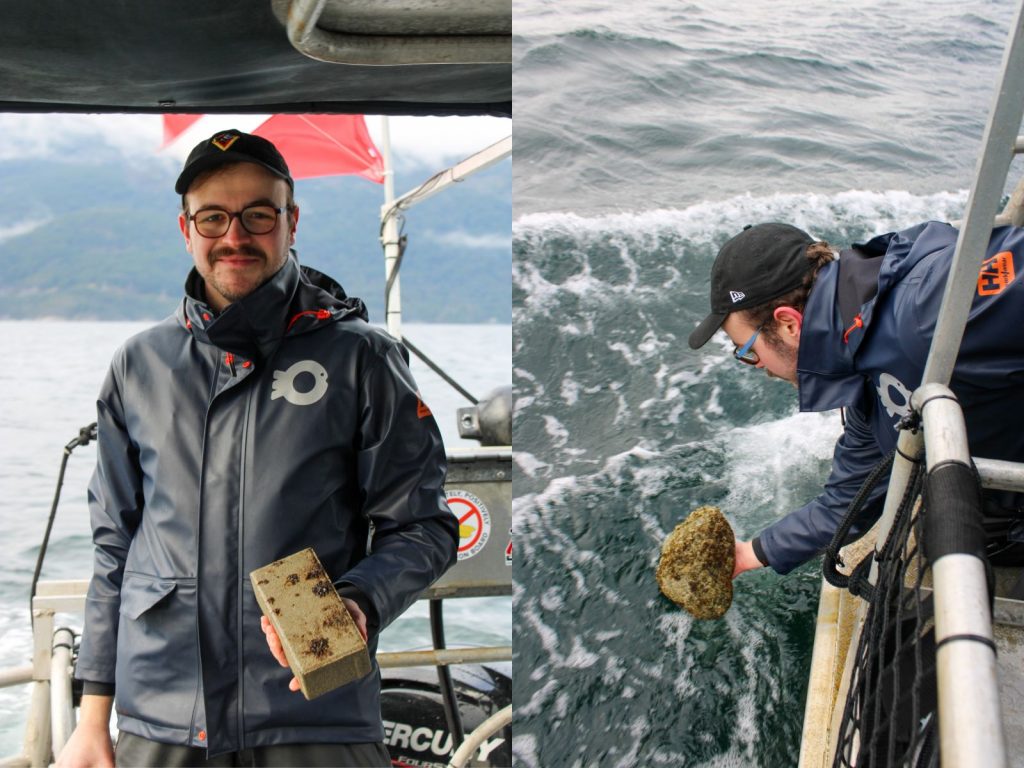
This was our second year of planting nursery-grown sugar kelp at our restoration sites in the Lower Mainland. Our first attempt in 2024 taught us a lot. Back then, we grew the kelp on small rocks and oyster shells, a technique referred to as “green gravel”. The kelp loved growing on these surfaces. However, the small rocks and oyster shells were too light, and couldn’t keep the kelp in place with strong currents carrying much of it away before it had a chance to take hold in the environment.
This year, we tried something new. Our team tested two new, heavier surfaces for growing kelp that were more likely to stay put on the ocean floor, large rocks and bricks. Bricks also added the extra bonus of being easier for our divers to find and monitor later on.
Watching It Grow
Restoration doesn’t stop once kelp is planted. In fact, planting is just the beginning. Years of monitoring are essential to track the success of restoration efforts and adapt strategies as needed. Without strong monitoring protocols, it’s nearly impossible to know whether restoration is working.
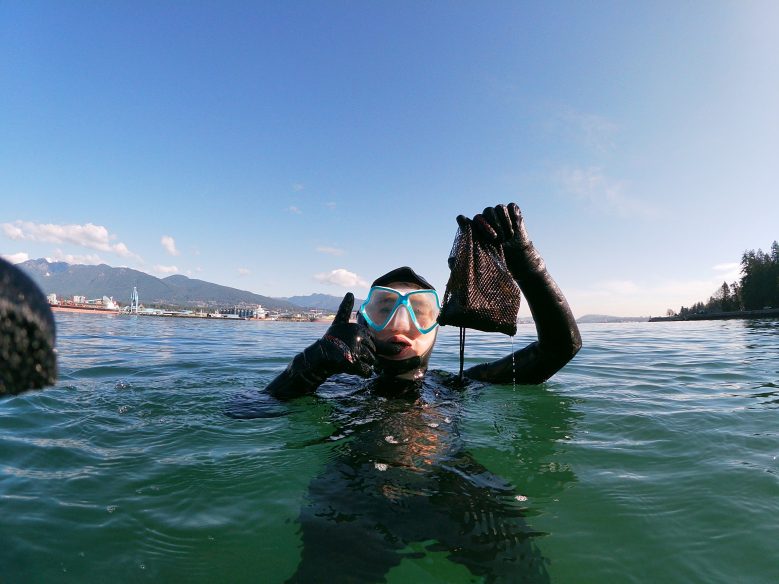
For the Átl’ḵa7tsem/Howe Sound project, monitoring is being carried out by trained SCUBA divers who follow set transects, which are straight paths through an ecosystem used in research to count and record the occurrence of plants, animals and other natural elements. Every ten metres, they stop to examine small, one-square-metre plots on the ocean floor called quadrats. Within each quadrat, they count and identify all the ocean life present, building a detailed picture of biodiversity and ecosystem health over time.
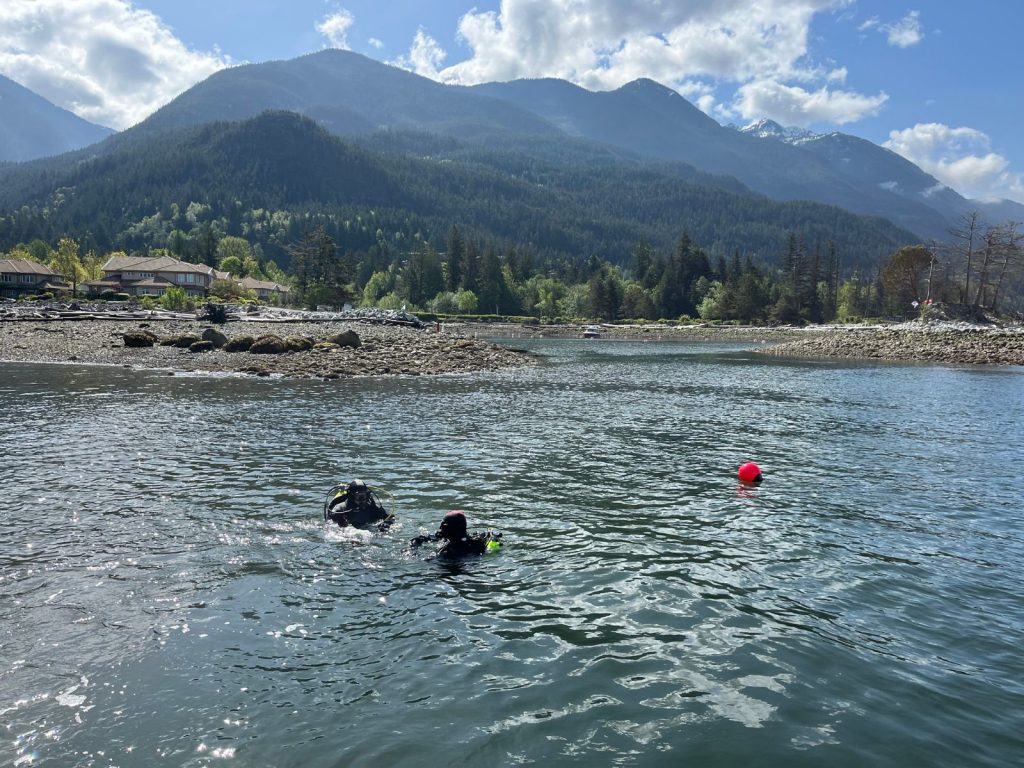
Unlike machines or remote tools, divers can notice small but important details, like a crab taking shelter under kelp blades or subtle shifts in the species inhabiting the ecosystem, that might otherwise go undetected and unrecorded.
To help standardize and share effective monitoring practices, Ocean Wise developed a comprehensive guidebook on kelp forest monitoring protocols with the Kelp Forest Alliance in 2024. This resource is available to restoration practitioners worldwide, making monitoring more consistent and enabling lessons learned to be shared so we can work together to restore kelp more effectively!
A Living Habitat
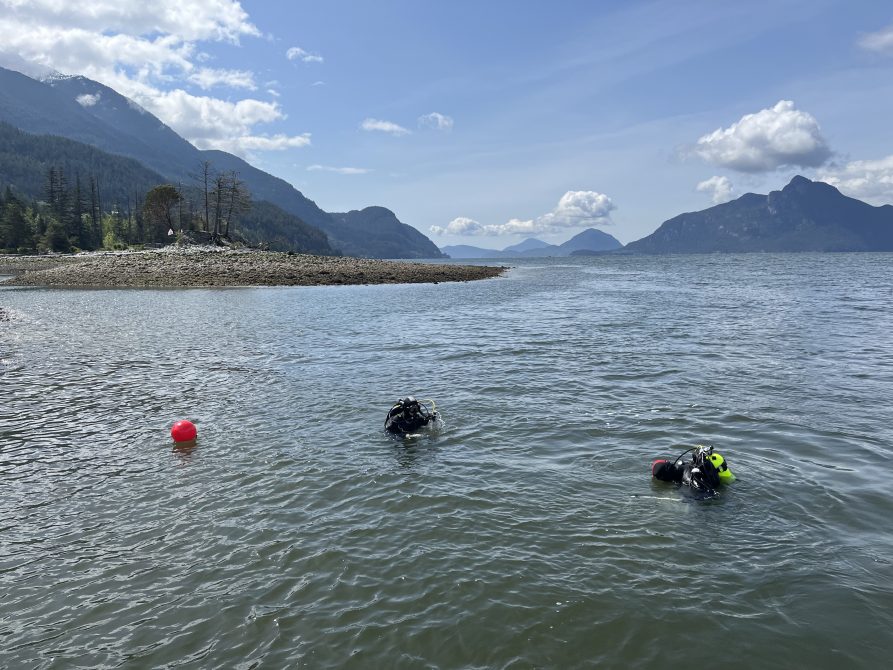
Earlier this summer, divers from Keystone Environmental, along with a representative from the Squamish First Nation, joined our team to head back to Átl’ḵa7tsem/Howe Sound and check on the kelp we planted. What we found gave us hope: the sugar kelp was already several feet long and had become home to decorator crabs, sea stars, and other marine life. In just a short time, the forest was beginning to do what kelp forests do best, create food and shelter for ocean inhabitants!
Our next steps in this region are to continue monitoring over the next couple years to record how well the restored kelp holds up over time.
Ways You Can Support
Restoring kelp is slow, careful work, but it’s worth doing. And you can be part of it too! Some ways you can get involved include:
Follow our Socials: Stay connected with our progress by following us on Instagram, Facebook, or LinkedIn, where we share updates, photos, and stories from the field.
Sign up for our newsletter: Get our restoration updates delivered straight to your inbox, so you’ll always be up to date.
Donate: Your support helps us grow our restoration projects and bring back more kelp forests along B.C.’s coast.
Together, we can help kelp thrive again, strengthening biodiversity and building hope for the future of our ocean.
Posted December 3, 2025 by Kim Bricker