B.C. knows how to help its kelp forests recover. Ottawa needs to make room
By Dr. Dalal Al-Abdulrazzak
B.C. kelp forest recovery is within reach, but outdated federal policies stand in the way. Learn how local solutions can help restore vital marine ecosystems and coastal resilience.
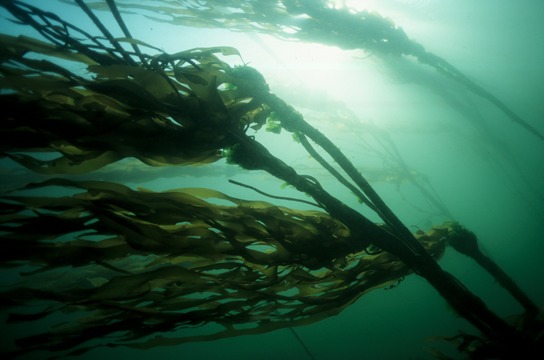
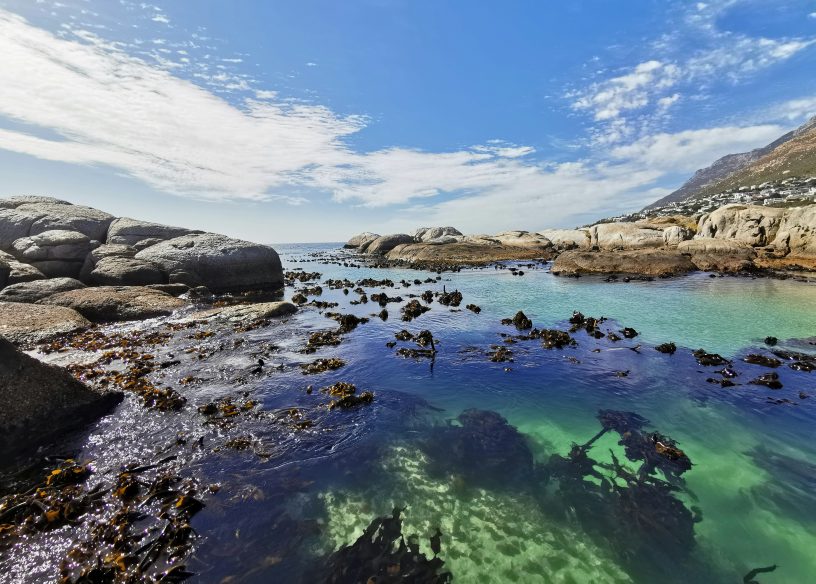
Kwum Kwum Island, a Squamish name meaning “area of plentiful kelp,” was once characterized by a thriving underwater forest that supported a rich diversity of marine life. Fish, sea otters, and sea stars inhabited the kelp ecosystem, while local fishers relied on its abundance for their livelihoods.
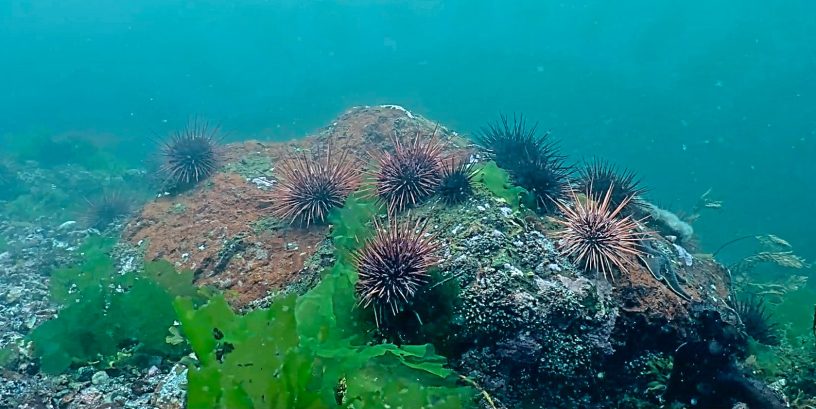
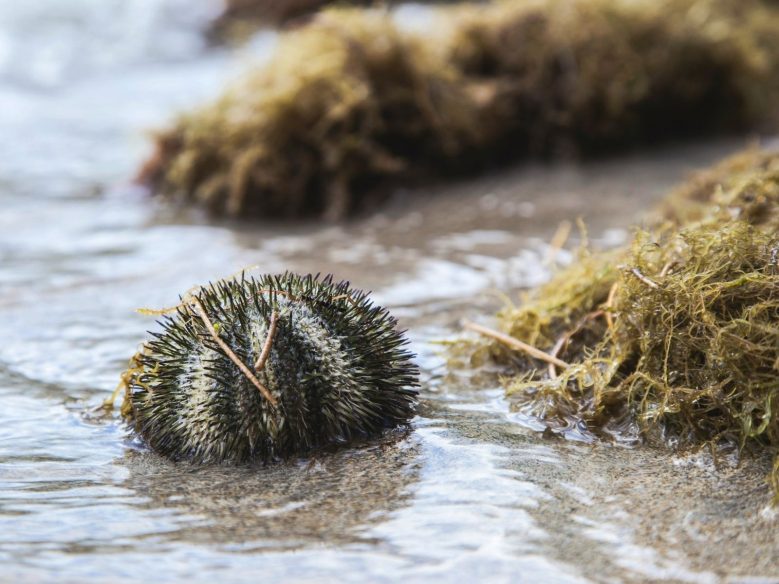
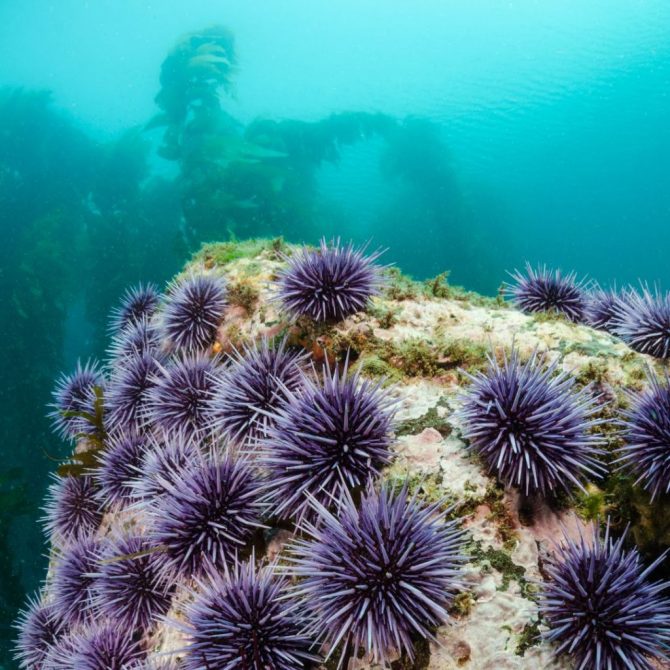
Today Kwum Kwum, the westernmost island in the Defence Islands in Howe Sound Inlet, has undergone a significant ecological transformation. The once-vibrant kelp forest has been replaced by an urchin barren.
Kelp forests, found along more than a quarter of the world’s coastlines, are among the most productive ecosystems on the planet – for reference, that’s five times more prevalent than coral reefs. These forests support fisheries, provide shelter and nurseries for marine life, and help stabilize coastal food webs. In many areas, these dense underwater forests of kelp have vanished, replaced by ‘urchin barrens,’ stretches of seafloor overrun by sea urchins and largely devoid of other marine life, carrying serious consequences for coastal communities. Where towering kelp once provided habitat for fish, invertebrates, and marine mammals, there is now little more than bare rock. When kelp disappears, biodiversity declines, which has a devastating impact on the resilience of the ecosystems and fisheries that depend on it.
We know what’s driving the problem: soaring populations of sea urchins that devour young kelp before it can establish. In British Columbia, climate change, disease and human activity have decimated sea otters and sunflower sea stars, the natural predators of sea urchins, leaving ecosystems out of balance. Without enough predators to keep urchin populations in check, the system can become stuck in a degraded state for years, even decades.
Thankfully, we know what is needed to reverse it.
In California and New Zealand, targeted removal of sea urchins has been shown to allow kelp the room it needs to recover. Reducing urchin densities below a certain threshold can help kelp regrow on its own, bringing other marine life back with it. It’s a relatively simple intervention with potentially outsized ecological and economic benefits.
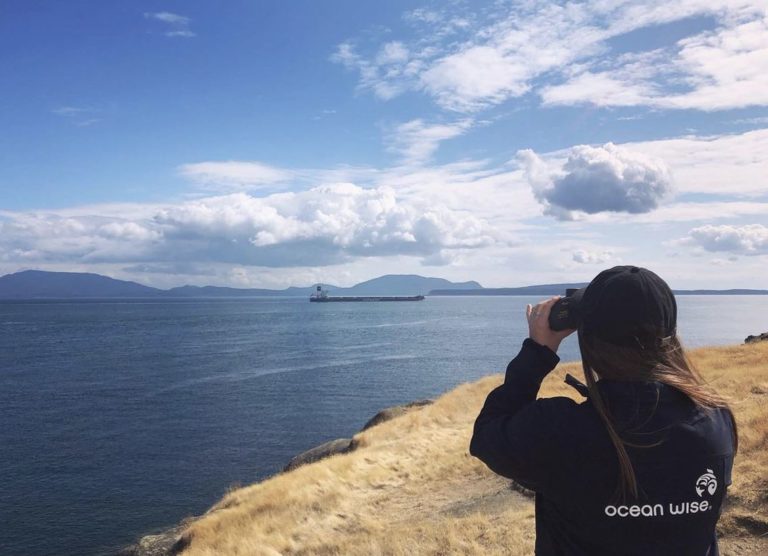
So why aren’t we doing more of it here? The answer lies, in part, with the Department of Fisheries and Oceans Canada (DFO). Under current federal rules, removing sea urchins falls under a licensing system designed primarily for commercial fisheries. It is not built for rapid, small-scale experiments or adaptive management. As a result, researchers, First Nations, and conservation organizations such as Ocean Wise face significant hurdles in testing where and how urchin removal could work along B.C.’s vast and varied coastline.
The good news is that British Columbia has the ingredients to lead in kelp forest recovery. Scientists are identifying priority areas like climate refugia and historical kelp beds where intervention could make a difference. Coastal First Nations are already advancing stewardship initiatives rooted in generations of knowledge and connection to these ecosystems.
What’s missing is a regulatory framework that enables action. Ottawa doesn’t need to overhaul the entire system. But it does need to make room for a new approach. While the current regulations allow DFO to issue scientific licenses to capture aquatic organisms for “the purpose of measuring species abundance, distribution, and biological characteristics”, the existing process does not consider ecosystem restoration as one of the goals. As a result, it tends to manage the removal of each species as discreet units rather than looking at an overall goal of tipping the ecosystem back in balance
In practice, that means fewer pilot projects, slower timelines, and missed opportunities to restore our kelp forests. In 2018 a “Central Vancouver Island Urchin Barren Management Area pilot program” was initiated, but no meaningful progress has been reported in the eight years following. Revisiting this program and developing a dedicated conservation pathway would allow qualified partners to act more quickly while maintaining appropriate oversight.
Piloting an experimental licensing pathway for conservation efforts would be a strong start. Such a pathway would allow approved partners such as First Nations, universities, and qualified organizations to carry out controlled urchin removal in clearly defined areas, with appropriate monitoring and oversight.
This would allow British Columbia to identify where urchin removal works and refine the approach as evidence develops. Over time, successful approaches could be scaled up, supporting both ecosystem recovery and fisheries productivity. Urchin removal can be paired with efforts to create value from what is harvested, whether through food markets or agricultural uses. These approaches can help offset costs and create incentives for sustained effort.
Doing nothing is not a neutral option. The longer we wait, the harder and more expensive recovery will become. British Columbians have a responsibility to protect coastal ecosystems so they can continue to sustain communities and marine life for generations.
If Ottawa is serious about protecting biodiversity and supporting sustainable fisheries, it should remove the barriers to practical, science-based restoration before more of B.C.’s kelp forests disappear.
Dr. Dalal Al-Abdulrazzak is Vice President, Conservation Programs at Ocean Wise, where she leads initiatives focused on sustainable seafood, whale conservation, plastic pollution, and ocean restoration.
Posted November 2, 2026 by Ocean Wise