Pourquoi la sécurité des baleines n’est pas la même au Canada et aux États-Unis — et que peut-on faire à ce sujet

Les experts appellent à une action rapide et coordonnée pour combler les lacunes en matière de protection et prévenir les menaces croissantes de collision.
[9 décembre 2025, Vancouver] Une nouvelle étude d’Ocean Wise, « Bridgeging borders : Toward alignement of environmental regulations in the Salish Sea for whale conservation », publiée dans Marine Policy, examine comment l’incohérence des réglementations environnementales entre le Canada et les États-Unis sape les efforts visant à protéger les baleines en danger et leurs proies dans la mer Salish.

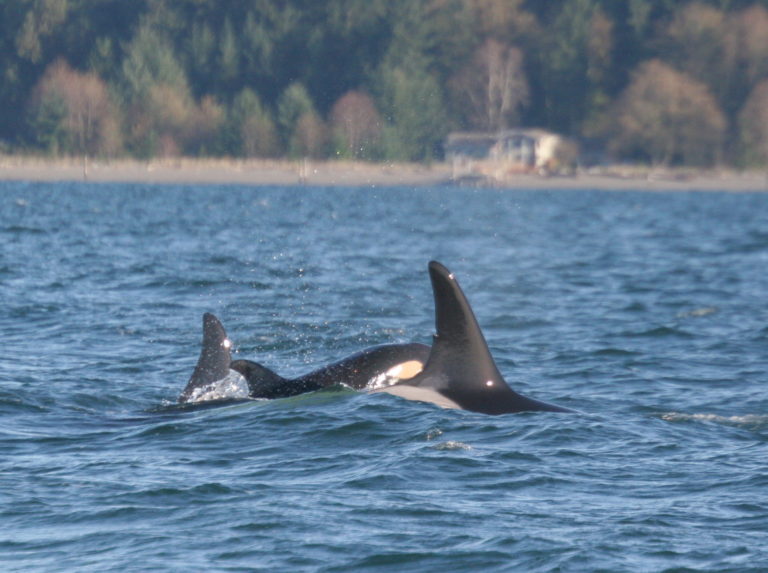
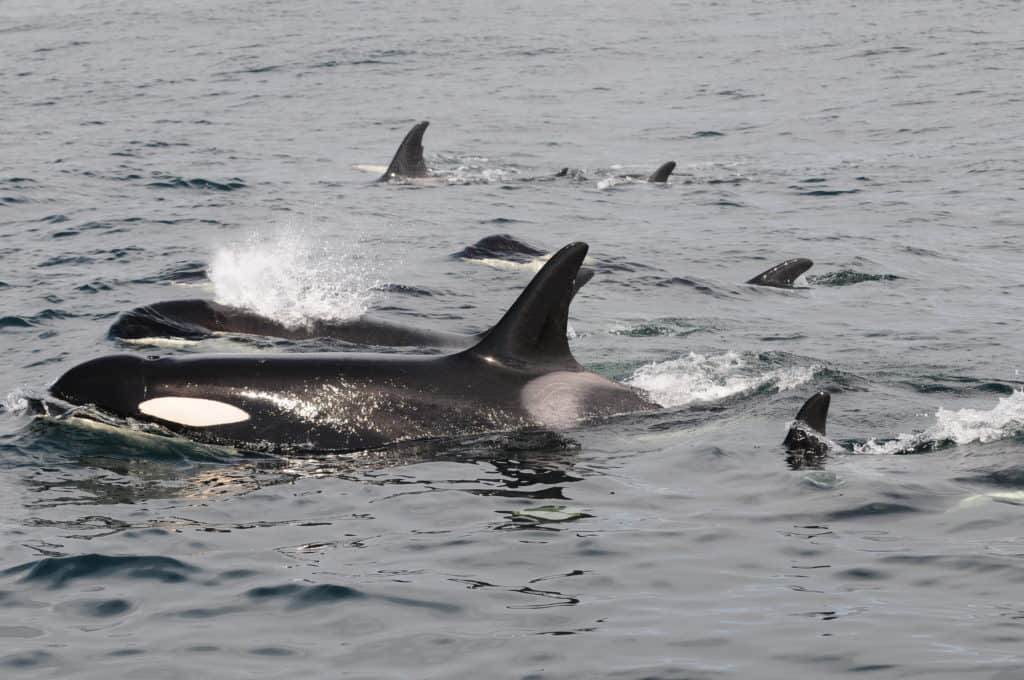
La mer des Salish est une masse d’eau écologiquement importante qui s’étend de l’État de Washington (États-Unis) au sud à la Colombie-Britannique (Canada) au nord. Elle englobe un habitat important pour les orques résidentes du Sud et les baleines à bosse, qui souffrent toutes deux de l’impact des perturbations causées par les navires, de la réduction de la disponibilité des proies et de la pollution des océans.
L’étude, menée par le Dr Chloe Robinson dans le cadre de sa bourse avec le Salish Sea Institute, a utilisé une approche mixte, combinant l’examen de 25 lois et règlements environnementaux avec des entretiens semi-structurés avec des experts fédéraux, étatiques et provinciaux des deux pays. Les politiques ont été classées en fonction de leur pertinence pour les baleines, leurs proies ou les deux, et analysées pour détecter les divergences transfrontalières.
Bien que ces baleines se déplacent librement à travers la frontière internationale, les réglementations censées les protéger ne le font pas.

Bien que les mesures existantes telles que les ralentissements saisonniers gérés par le programme ECHO (Canada) et Quiet Sound (États-Unis), ainsi que des outils de conscience situationnelle comme le système d’alerte aux rapports de baleines (WRAS) d’Ocean Wise, offrent des avantages importants, l’étude a identifié d’importantes lacunes d’alignement au niveau légal.
Les principales divergences identifiées incluent des différences allant jusqu’à 600 mètres dans les distances d’approche des navires entre le Canada et les États-Unis, l’absence d’inscriptions de populations de saumon Chinook en vertu de la Loi canadienne sur les espèces en péril, et des mécanismes de contrôle de la pollution plus stricts aux États-Unis comparativement au Canada. L’étude, une version plus détaillée d’un rapport publié par le Salish Sea Institute en juillet 2025, conclut que ces désalignements contribuent à augmenter le risque d’extinction des orques résidentes du Sud et à accroître les menaces qui pèsent sur les baleines à bosse dans toute la région.

« Les baleines ne reconnaissent pas la ligne invisible tracée à travers leur habitat. La mer Salish est une zone où les baleines subissent des changements radicaux de protection, notamment en ce qui concerne la proximité des navires de part et d’autre de cette ligne » – Dr Chloe Robinson, auteure et conseillère stratégique & responsable technique de l’Initiative Whales chez Ocean Wise.

L’étude a également mis en évidence l’absence de réglementation visant à protéger les baleines à bosse. L’absence de mesures de protection spécifiques à l’espèce rend cette population en voie de rétablissement vulnérable à des menaces évitables, telles que les collisions avec les navires et les enchevêtrements de baleines. Cette préoccupation est soulignée par les trois collisions récentes avec des baleines à bosse signalées dans la mer des Salish, qui montrent que l’intensification de l’activité humaine accroît directement les risques pour l’espèce.
L’amélioration de l’alignement des réglementations canadiennes et américaines pourrait immédiatement renforcer la protection des espèces en danger en réduisant le bruit des navires, en diminuant le risque de collision, en augmentant la disponibilité des proies et en garantissant que les habitats essentiels sont protégés de manière cohérente.
“Des gestionnaires de l’État de Washington et de la Colombie-Britannique nous ont déjà fait savoir que les résultats préliminaires étaient d’un grand intérêt et qu’ils allaient probablement entraîner une plus grande harmonisation des politiques. Je me réjouis de leur publication dans Marine Policy”. – Ginny Broadhurst, directrice du Salish Sea Institute.
Ce travail doit également aller de pair avec une cogestion renforcée avec les nations indigènes et tribales, dont la gouvernance, les connaissances et la gestion de longue date de ces eaux sont fondamentales pour créer des stratégies de conservation résilientes et transfrontalières.

Face à l’accroissement de l’activité humaine et à l’intensification rapide des menaces, l’harmonisation des protections transfrontalières n’est plus facultative, elle est essentielle pour assurer la survie des baleines de la mer des Salish pour les générations à venir.
Cette étude a été rendue possible grâce au soutien généreux du Salish Sea Institute, aux donateurs du programme d’adoption d’orques Ocean Wise et à plusieurs évaluateurs anonymes.
Contact médias
Nic Schulz
Directeur de la communication et de l’engagement
[email protected]
À propos d’Ocean Wise
Ocean Wise est une organisation mondiale de conservation dont la mission est de construire des communautés qui prennent des mesures concrètes pour protéger et restaurer notre océan. Grâce à la recherche, à l’éducation, à l’innovation et à la collaboration, nous renversons la tendance de trois grands défis océaniques : la pollution plastique, la surpêche et le changement climatique. En créant des communautés d’intérêt comprenant des industries, des gouvernements et des citoyens ordinaires, nous créons un avenir où notre océan et les personnes qui en dépendent peuvent prospérer. Ocean Wise a son siège à Vancouver, en Colombie-Britannique, avec des activités touchant plus de deux douzaines de pays à travers le monde.
Posted December 8, 2025 by Nic Schulz