Who’s Eating all the Kelp : le problème des oursins et comment le résoudre


Les oursins existent depuis des millions d’années et contribuent à l’équilibre des écosystèmes océaniques en se nourrissant d’algues.
Mais quelque chose a changé. Les oursins ont deux principaux prédateurs naturels : la loutre de mer adorable et l’étoile de mer tournesol remarquable. Mais l’activité humaine auxXVIIIe etXIXe siècles a provoqué un déclin massif du nombre de loutres de mer. Et bien que certaines populations se soient rétablies, beaucoup luttent encore, et les impacts du déséquilibre des écosystèmes n’ont pas disparu.

Avec moins de prédateurs, le nombre d’oursins a explosé. Et cette armée d’invertébrés hérissés transforme certaines de nos plus luxuriantes forêts de varech en friches sous-marines.
Que sont les landes à oursins ?
Vous vous demandez peut-être : « Combien de dégâts les oursins peuvent-ils bien faire ? » Mais lorsqu’elles sont laissées à pâturer, elles créent des vastes étendues de fonds marins entièrement dépouillées de varech.
Et même si dévorer toute leur source de nourriture ne semble pas être la meilleure stratégie pour survivre à long terme, les gamins ont un tour unique dans leur manche. Une fois qu’ils ont mangé toutes les vareches de leur environnement, ils entrent dans un état d’hibernation. Cela leur permet de rester en vie jusqu’au retour d’une source de nourriture sans mourir de faim.
En d’autres termes, ils peuvent détruire une forêt et attendre qu’elle disparaisse.

Pourquoi les oursins qui mangent le varech posent-ils un problème ?
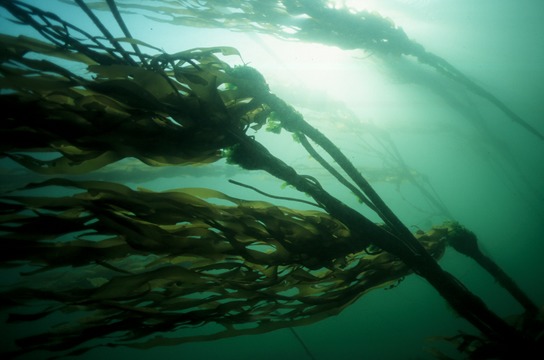
Les forêts de varech sont essentielles à la vie sous l’eau et au-dessus de l’eau. Sous les vagues, elles fournissent de la nourriture, des abris et des zones de reproduction à des milliers d’espèces marines. Ces incroyables algues sont également de puissants alliés pour atténuer les effets du changement climatique en absorbant le carbone de l’atmosphère et en protégeant les côtes des tempêtes intenses.
Cependant, lorsque les oursins se nourrissent trop et transforment les forêts de varech en zones stériles, ils ne font pas que détruire de magnifiques habitats sous-marins. Cela affecte toute la vie qui en dépend, y compris la nôtre.
Comment résoudre le problème des barrens d’oursins ?
Des travaux sont déjà en cours pour accroître la présence des prédateurs naturels des oursins dans l’océan. Et même si cela aide, il faut plus d’intervention pour freiner la prise de contrôle par les oursins.
Des études en Nouvelle-Zélande, en Californie et à Haida Gwaii montrent qu’un enlèvement ciblé des oursins peut offrir aux forêts de varech l’espace nécessaire pour se remettre du surpâturage. En 2026, nous appliquerons ces enseignements à Barkley Sound avec nos partenaires, la Première Nation Tseshaht et l’Association des moissonneurs d’oursins du Pacifique (PUHA). Ensemble, nous construisons un programme communautaire d’élimination des oursins qui réunit la science, la technologie, les savoirs traditionnels et l’expertise locale.
Dans le cadre de ce travail, les membres de la communauté de Tseshaht seront formés à la récolte durable des oursins. Les oursins étant une source de nourriture traditionnelle, les oursins récoltés peuvent être partagés au sein de la communauté, le reste étant disponible à la vente. Cela crée des opportunités économiques tout en réduisant activement la pression sur les forêts de varech.
En associant les connaissances traditionnelles à la science, nous espérons créer un modèle qui offre des avantages écologiques et économiques, garantissant ainsi la prospérité de ces forêts sous-marines pour les générations à venir.
Pour en savoir plus sur notre travail de restauration des laminaires , cliquez ici.

Merci à la Fondation RBC, au Fonds de recherche sur le climat de la Banque Scotia, à la Fondation Peter Gilgan et à la subvention HCLTech pour l’action climatique pour votre investissement généreux afin d’aider à restaurer des forêts vitales de varech, renforcer les écosystèmes côtiers et faire progresser des solutions climatiques menées par la communauté.
Posted December 8, 2025 by Kim Bricker